Haven-1 Lab
Enabling innovation in microgravity

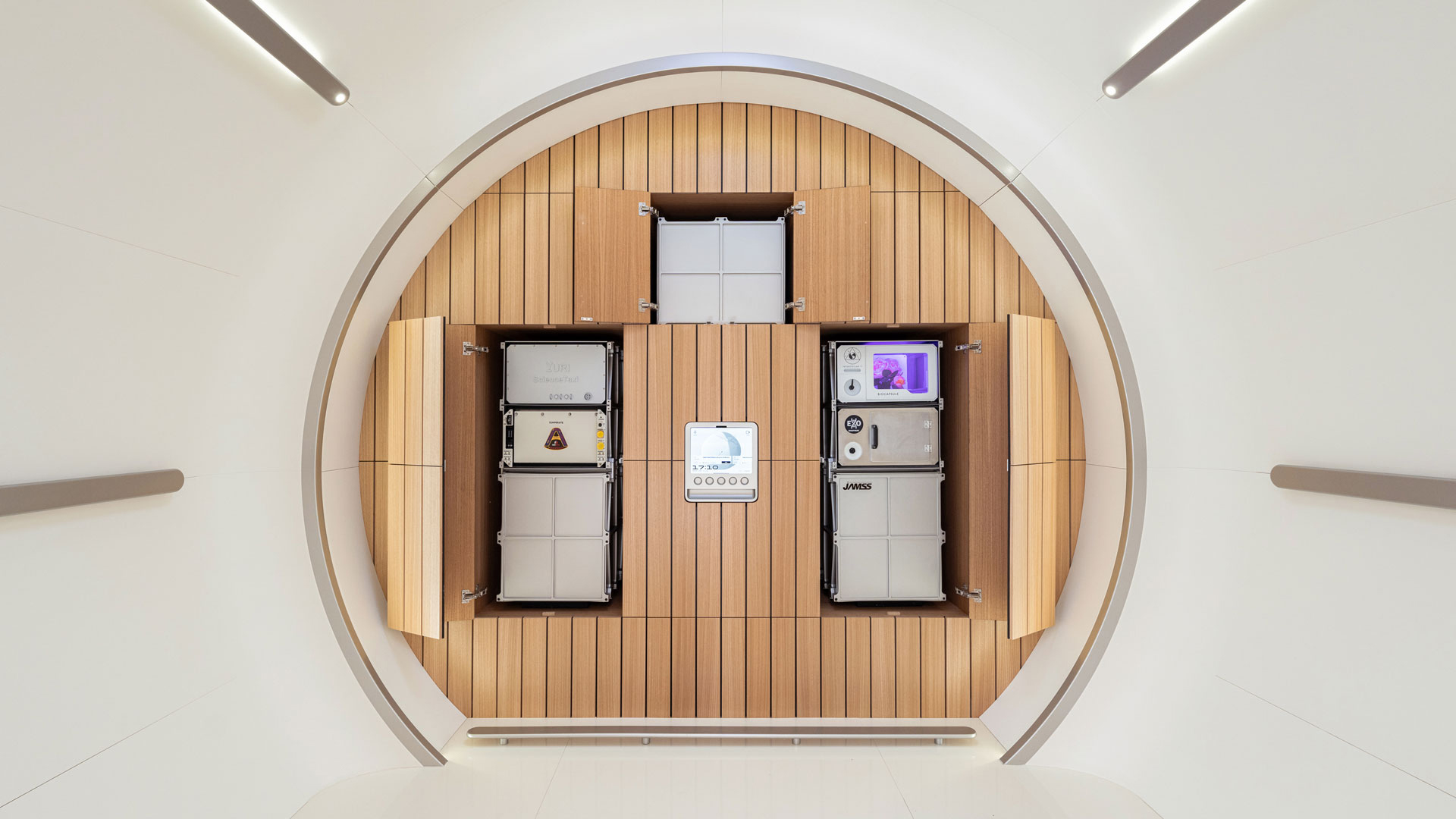
The Haven-1 Lab is the world’s first microgravity research, development, and manufacturing platform on a commercial space station.
The Haven-1 Lab is the world’s first microgravity research, development, and manufacturing platform on a commercial space station.
Types of research

Biology and biotechnology
Microgravity accelerates disease research and pharmaceutical testing, opening new possibilities for regenerative medicine, space-based bioprinting, and nanoparticle development. Space-based plant research supports more self-sufficient, long-duration missions.

Physical sciences
Microgravity research inside Haven-1 Lab advances fluid dynamics, materials science, and combustion studies in conditions impossible to replicate on Earth.

Technology demonstrations
Haven-1 Lab will help test and perfect technologies that support human life in space, while also improving technologies that benefit life on Earth.

Human health and performance
To understand how crew health can be sustained for long-duration missions, Haven-1 missions will include studies on the impact of microgravity, and space habitation in general, on human psychology and physiology.
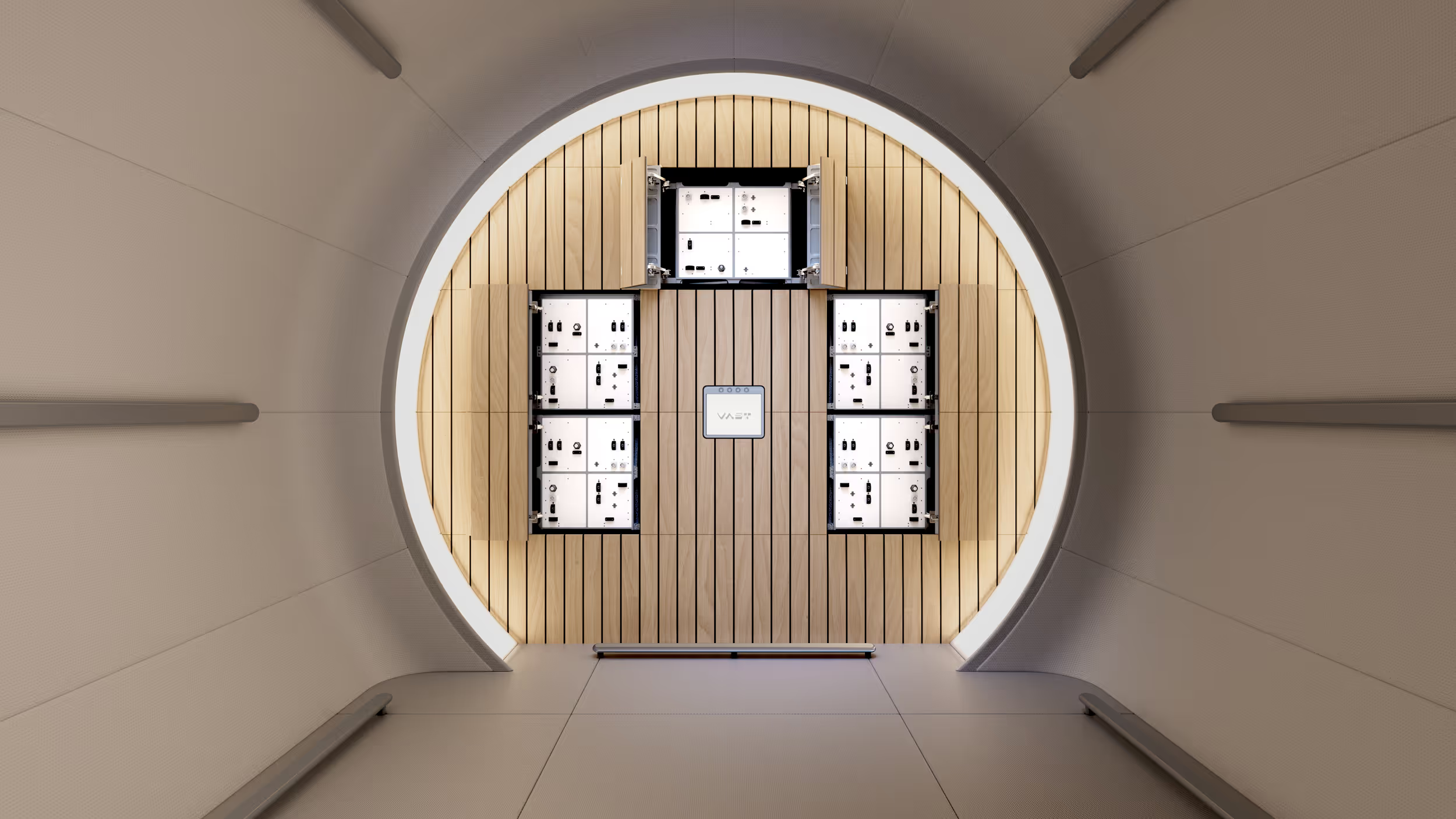
Full ISS EXPRESS rack capacity
Eight Middeck Locker Equivalent (MLE) payload slots, with 100 W of continuous power per slot.

Payload operations
The system is operated by the Haven-1 astronaut crew and can be remotely commanded and monitored via Starlink's gigabit-speed Internet.

Product Return
Deliver and return products and samples from space via a SpaceX Dragon spacecraft.
Partner network
Haven-1 Lab partners are some of the foremost experts in the development of microgravity payloads.


Reserved for crew partners
Conditioned Stowage



Conditioned Stowage


ScienceTaxi
The ScienceTaxi can accommodate up to 38 experiment units known as ScienceShells. The ScienceTaxi will provide scientists with a powerful tool for studying the effects of microgravity on various biological systems.

Advanced Space Experiment Processor 4 (ADSEP4)
ADSEP4 is a fully automated, multi-use processing facility that is used to conduct a variety of life and physical science research. The facility also supports small-batch biotechnology production in microgravity, with a capacity of up to four sample processing cassettes for pharmaceutical research and manufacturing.

Eden 1.0
EDEN 1.0 is a plant growth unit designed to measure and understand the impact of microgravity on plant growth.

Orbital High-Throughput Screening Device (OHTS)
The OHTS is designed to conduct experiments that uncover cellular behaviors that are not observable under Earth’s gravity. Experiment results will provide pharmaceutical, biotech, and healthcare companies with insights to create therapeutics to improve human life on Earth and in space.

KLABOX
Japan Manned Space Systems Corporation (JAMSS) will install KLABOX, a multi-purpose payload facility designed to accommodate microgravity experiments and small cube modules known as KLABOX Cubes. These cubes support a range of applications, including scientific research, technology development, and merchandising or promotional use.
Haven-1 Lab capabilities support all of NASA’s Category 1 utilization requirements.
*Middeck lockers can be combined