updates
Vast Welcomes Retired NASA Astronaut Megan McArthur as Astronaut Advisor

Vast, the company developing next-generation space stations, announced today that former NASA astronaut Megan McArthur has joined the company as an Astronaut Advisor following her retirement from NASA, after completing more than two decades of service in human spaceflight. McArthur joins Vast’s corps of astronaut advisors, led by Lead Astronaut Andrew Feustel, alongside retired NASA astronaut Garrett Reisman and former JAXA astronaut and Vast Japan General Manager Naoko Yamazaki. Together, they advise the company on the future of human spaceflight in low-Earth orbit.
A veteran of two space missions, McArthur logged 213 days in space and made history as the first woman to pilot a SpaceX Dragon spacecraft. She is also the last person to “touch” the Hubble Space Telescope, capturing and releasing it with the space shuttle’s robotic arm during the final servicing mission in 2009.
At Vast, McArthur will advise on astronaut operations, human-centered spacecraft design, mission readiness, and the lived experience of working and thriving in orbit, helping to ensure Vast’s space stations are built to support safe, productive, and pioneering crewed missions.
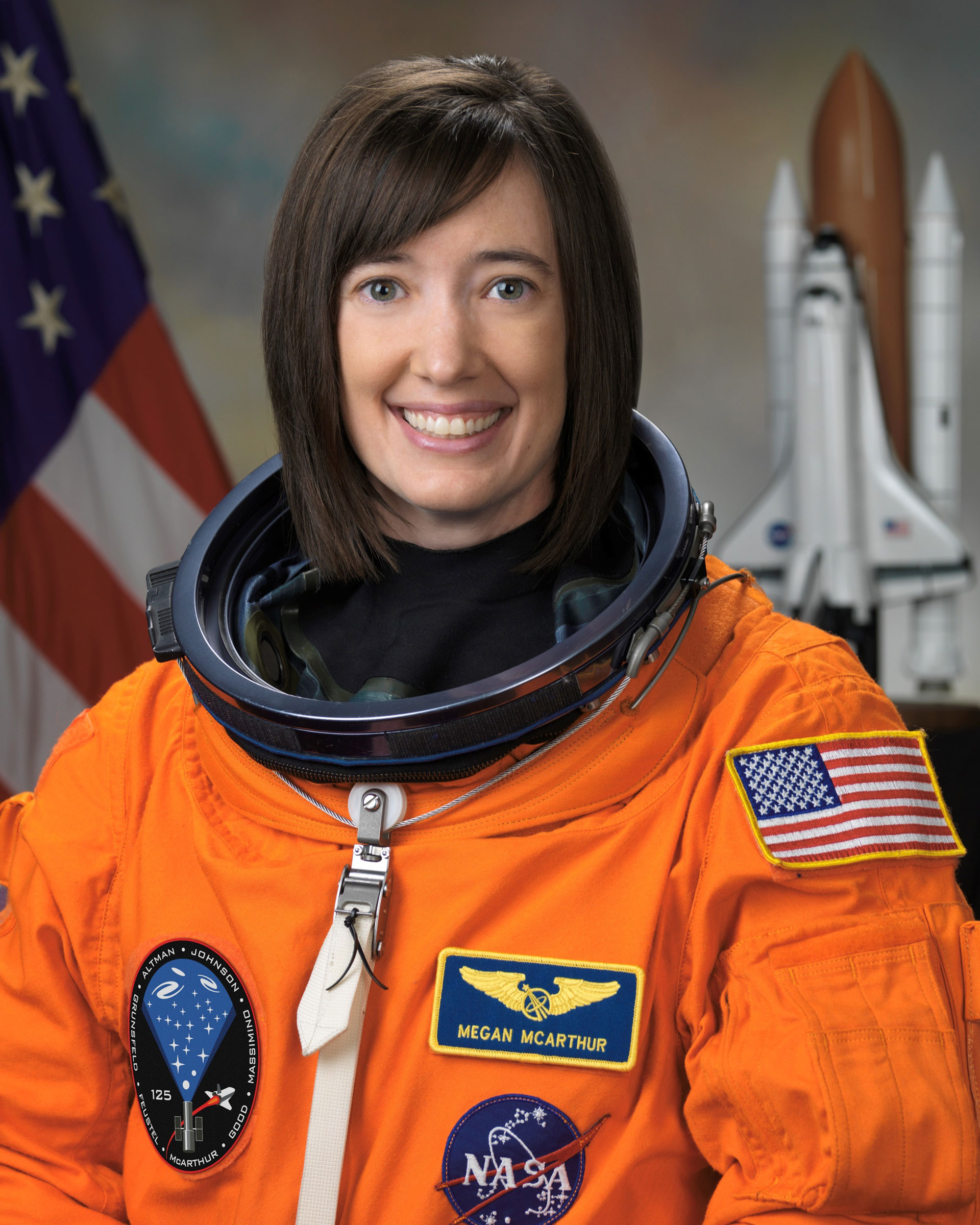
“We’re honored to welcome Megan to Vast; she is a uniquely experienced and versatile astronaut,” said Max Haot, CEO of Vast. “Her firsthand experience flying, living, and leading in space gives her a powerful perspective. As we build Haven stations, Megan’s insight into crew needs and operations for mission success will be invaluable.”
“Megan brings the kind of operational judgment and crew-first perspective that should shape the future of commercial space stations,” said Feustel, Lead Astronaut at Vast. “Her experience across short- and long-duration missions, vehicle operations, and leadership makes her a powerful addition to our Astronaut Advisory Group as we design stations where crews can live, work, and perform safely in-orbit.”
“Serving as a NASA astronaut and contributing to research that benefits life on Earth while preparing humanity for exploration beyond it was a privilege," McArthur said. “I’m excited to bring that experience forward and support Vast’s vision for the next era of human spaceflight. Vast has the team, focus, and ambition to lead the development of the next generation of space stations.”
McArthur most recently flew as pilot of NASA’s Crew-2 mission, in April 2021, which began her first long-duration stay aboard the International Space Station. During her nearly 200-day mission, she served as a flight engineer for Expeditions 65 and 66, conducting a wide range of scientific investigations in human health, materials science, and robotics, work that directly supports NASA’s Artemis program and future human missions to Mars.
Her first spaceflight, STS-125 aboard space shuttle Atlantis, was the fifth and final servicing mission to the Hubble Space Telescope. As a mission specialist, McArthur was responsible for capturing Hubble with the robotic arm and supporting five spacewalks that extended the telescope’s scientific life after nearly two decades in orbit. She also played a key role in shuttle launch, rendezvous, and landing operations.
Beyond her flight experience, McArthur held multiple leadership roles at NASA. She served as assistant director of flight operations for the ISS Program beginning in 2017 and became deputy division chief of the Astronaut Office in 2019, supporting astronaut training, development, and active spaceflight operations.
Since 2022, she has served as chief science officer at Space Center Houston, NASA Johnson’s official visitor center, where she continues to champion public engagement with science and the benefits of space exploration.
McArthur holds a Bachelor of Science in aerospace engineering from UCLA and a Ph.D. in oceanography from the Scripps Institution of Oceanography at UC San Diego. Prior to her astronaut selection in 2000, she conducted oceanographic research in underwater acoustics, combining technical research with extensive shipboard work and scuba diving.
About Vast
Vast is developing next-generation space stations to ensure continuous human presence in space for America and its allies, enabling advanced microgravity research and manufacturing, and unlocking a new space economy for government, corporate, and private customers. Using an incremental, hardware-rich and low-cost approach, Vast is rapidly developing its multi-module Haven Station. Haven Demo’s 2025 success made Vast the only operational commercial space station company to fly and operate its own spacecraft. Next, Haven-1 is expected to become the world’s first commercial space station when it launches in 2026, followed by additional Haven modules to enable permanent human presence by 2030.
With more than 1,000 employees at its Long Beach, California headquarters and over a billion dollars in private capital invested, Vast has built the facilities required to manufacture and operate America’s next space station. The company plans to develop future habitats for the Moon and Mars, dedicated space stations for government partners, and other crewed systems that will unlock the expanding long-term space economy.
.jpg)
