updates
The European Space Agency and Vast Build on Existing Mission Collaborations and Strengthen Cooperation for Post-ISS Era
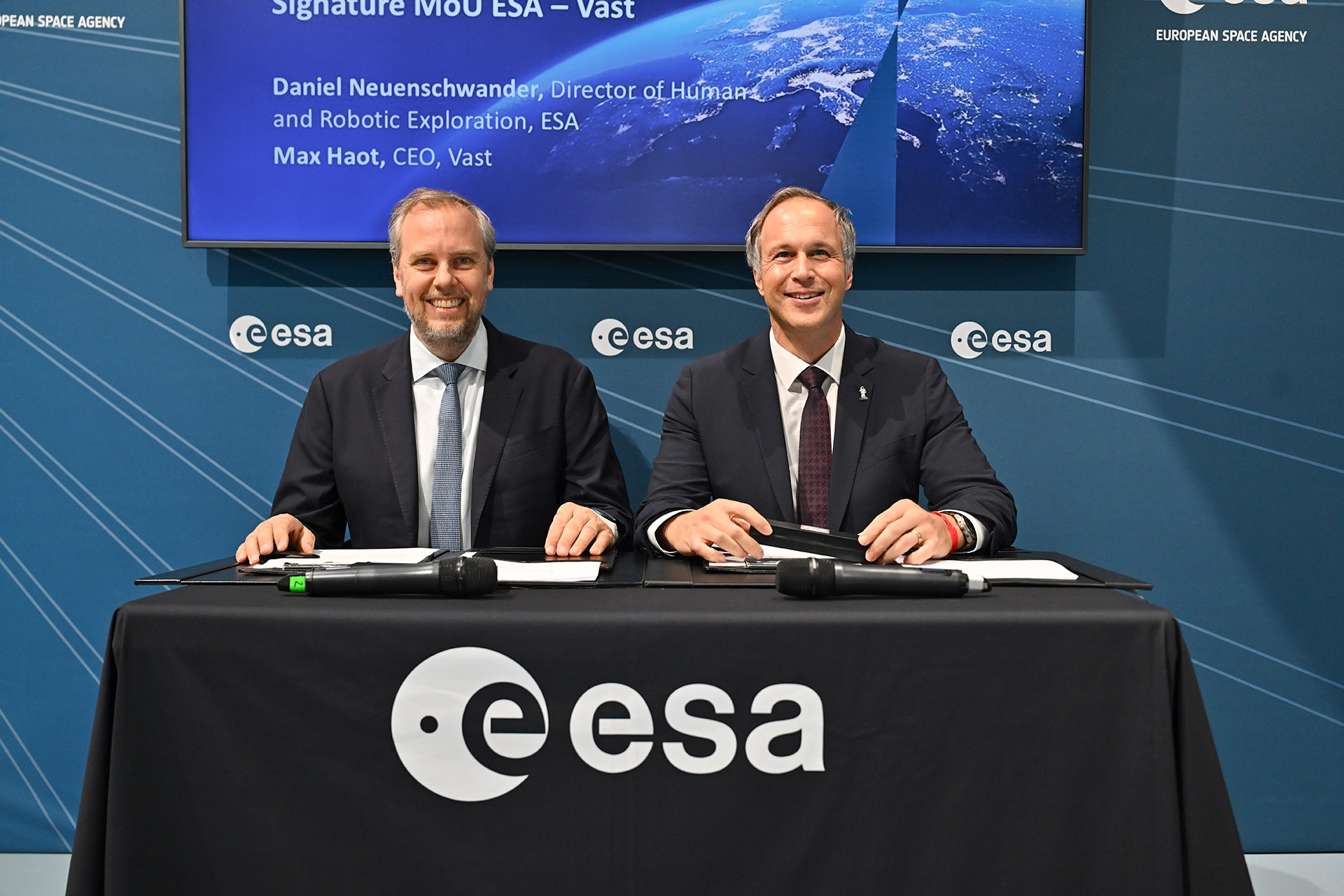
During the 77th International Astronautical Congress, the European Space Agency (ESA) and Vast, a company developing next-generation space infrastructure, signed a Memorandum of Understanding (MoU) regarding collaboration between the two parties and development of a framework to work together ahead of the upcoming end of service of the International Space Station (ISS).
This MoU replaces the previous MoU that ESA and Vast signed at ILA Berlin in June 2024 and broadens their cooperation in human spaceflight, science, technology, and commercialization. It runs for an initial three years, starting with a joint feasibility study of research and utilization opportunities for Europe on Haven space stations, intended to produce a shared roadmap for future cooperation.
“ESA and Vast are already collaborating on missions for four crew members, across missions to the International Space Station and Haven-1, planned for 2027, including the first crewed mission to Haven-1,” said Max Haot, CEO of Vast. “This MoU looks beyond those missions to the post-ISS era. We are designing Haven Station to ensure ESA, its astronauts, and its scientists have continued access to low-Earth orbit, while carrying forward the strong international collaboration that has defined the International Space Station.”
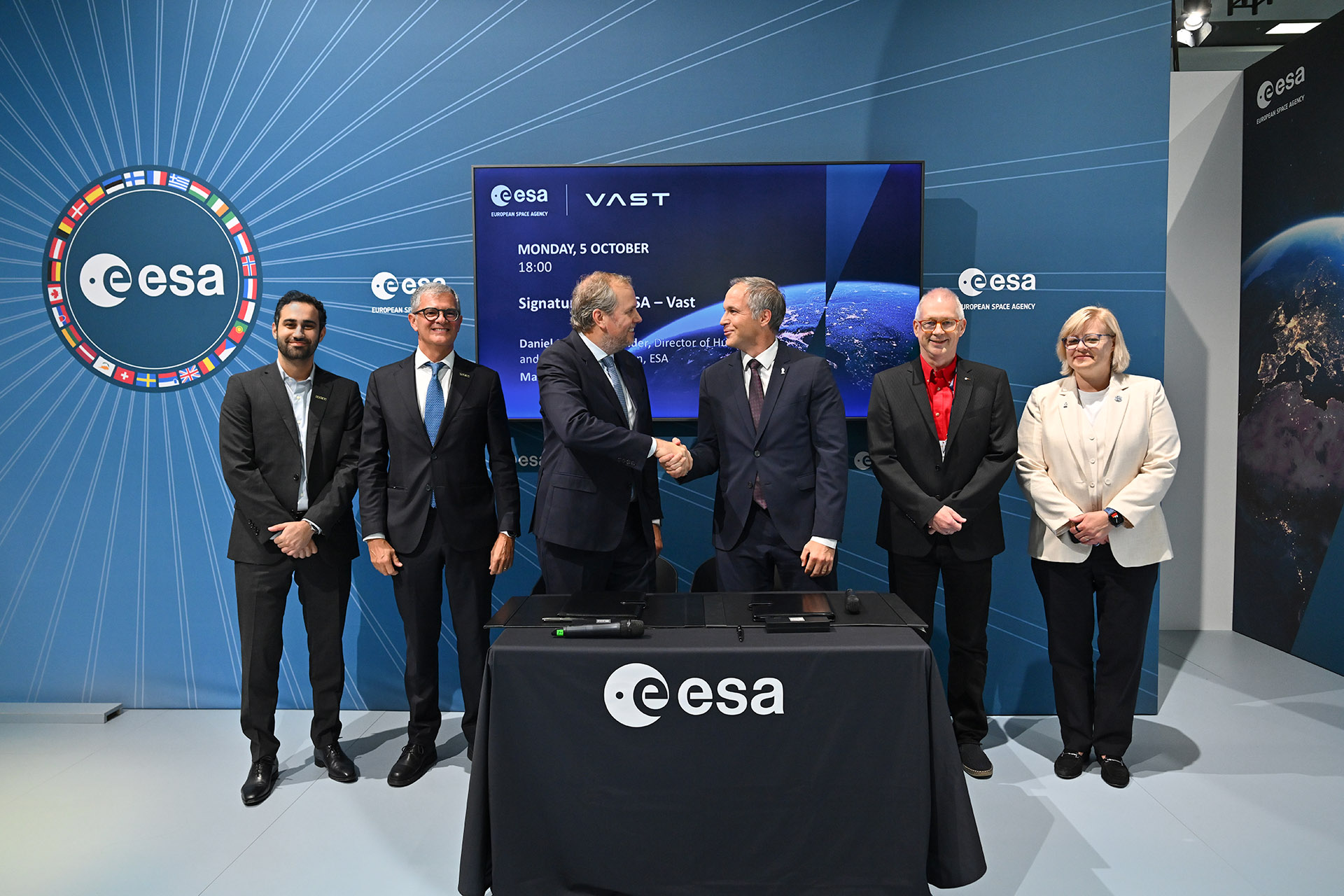
“The International Space Station has been one of the greatest examples of international cooperation in space,” said ESA Director General Josef Aschbacher. “As Europe prepares its future space exploration strategy, we are assessing a range of options for maintaining our presence in Low Earth Orbit. This cooperation with Vast is an important step in helping us define future opportunities for European astronauts, research, and technology.”
“To ensure Europe’s future in low-Earth orbit, we need to anticipate and ensure our readiness once the great cooperation on ISS comes to an end,” said Daniel Neuenschwander, Director of Human and Robotic Exploration at ESA. “In this regard, we are investigating various options to ensure our future collective ability to implement science and technology demonstrations in a microgravity environment. This effort will also play a key role in creating new flight opportunities for our astronaut corps.”
The MoU sets out a phased approach. In the near term, the two organizations intend to focus on astronaut missions and related research on Haven-1 and on Vast-PAM-1, NASA's sixth private astronaut mission to the ISS. Four astronauts will fly on Vast-PAM-1, three of whom have been announced: Thomas Pesquet for France, Aleš Svoboda for Czech Republic, and Adrianos Golemis for Greece. Under the same agreement with France, Arnaud Prost is confirmed for a mission to Haven-1. Over the longer term, and subject to future decisions by ESA and its Member States, the two organizations intend to explore European contributions to and utilization of future Haven space stations, including the potential use of European transportation and launch services.
Vast’s future Haven Station is designed to be self-sufficient, with its own propulsion, guidance, avionics, power, and life support, leveraging systems Vast has built in-house and already flown on Haven Demo, its in-space testbed for station technologies. Haven Demo completed all 49 of its test objectives during a three-month mission before a controlled deorbit on February 4, 2026. Haven Station is the next step on Vast's path to a continuous human presence in low-Earth orbit for America and its allies, following Haven Demo and Haven-1, which is targeted to begin crewed operations in 2027.
About Vast
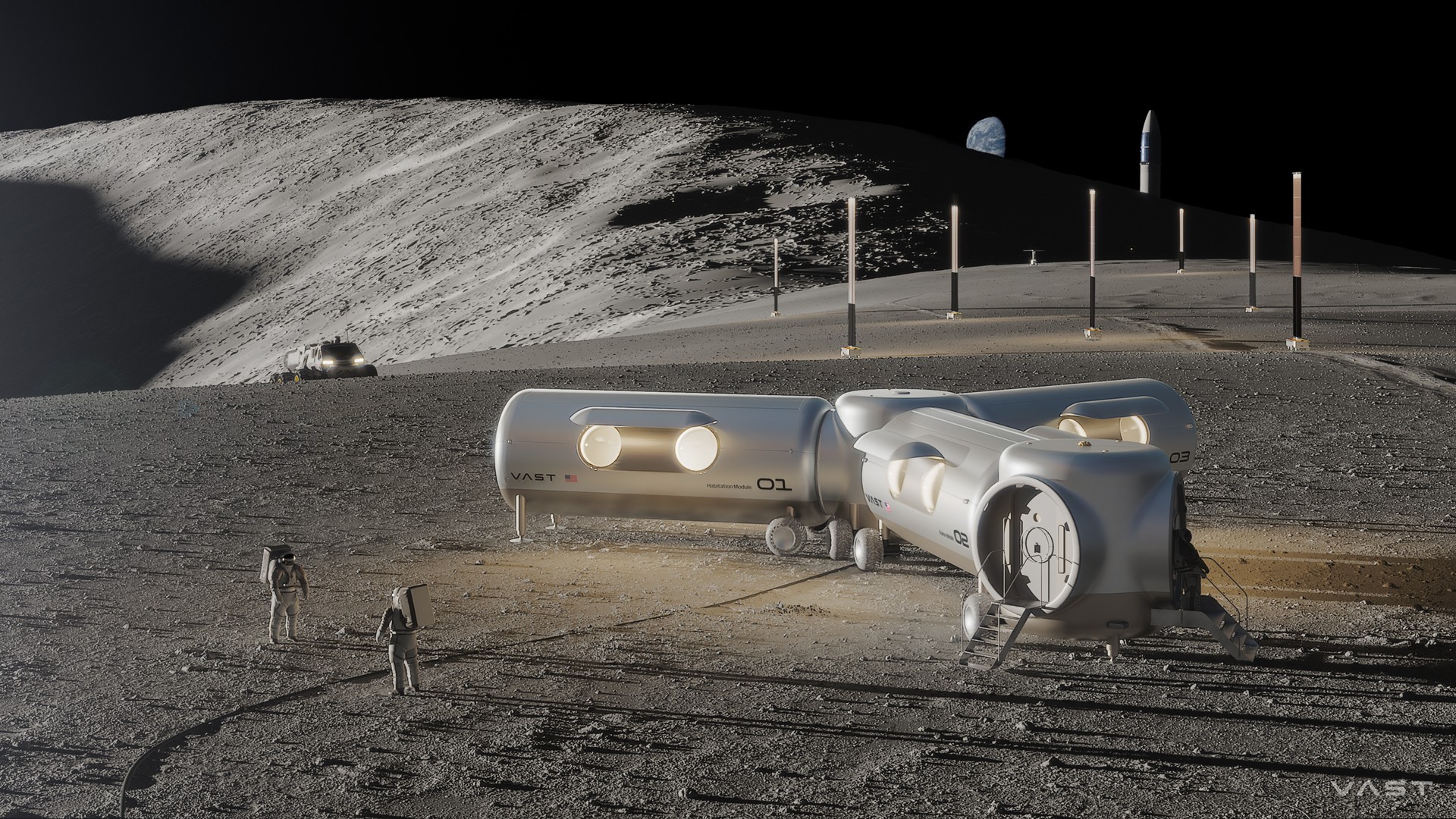
Vast is developing next-generation space stations and space infrastructure using an incremental, hardware-rich, and capital-efficient approach. Vast is rapidly developing its multi-module Haven Station to support a continuous human presence in space for America and its allies, enabling advanced microgravity research and manufacturing, and supporting a growing space economy for government, corporate, and private customers. Haven Demo’s success made Vast the only operational commercial space station company to design, build, and operate its own spacecraft in orbit. Next, Haven-1 is targeted to become the world’s first commercial space station, with launch anticipated in 2027, followed by additional Haven modules. Additionally, the company recently announced two new offerings leveraging its space station components and the heritage of Haven Demo: Vast Satellite, a high-power satellite product line; and Vast Lunar Systems, power, communications, and habitats for the Moon.
Headquartered in Long Beach, California, and with more than 1,000 employees and over a billion dollars in private capital, Vast has built the facilities capable of manufacturing America’s next space station. The company plans to develop future habitats and systems for Mars, dedicated modules for government partners, and other crewed systems designed to unlock the expanding long-term space economy.
About ESA
The European Space Agency (ESA) provides Europe’s gateway to space.
ESA is an intergovernmental organisation, created in 1975, with the mission to shape the development of Europe’s space capability and ensure that investment in space delivers benefits to the citizens of Europe and the world.
ESA has 23 Member States: Austria, Belgium, the Czech Republic, Denmark, Estonia, Finland, France, Germany, Greece, Hungary, Ireland, Italy, Luxembourg, the Netherlands, Norway, Poland, Portugal, Romania, Slovenia, Spain, Sweden, Switzerland and the United Kingdom. Cyprus, Latvia, Lithuania and Slovakia are Associate Members.
ESA has established formal cooperation with three other Member States of the EU. Canada takes part in some ESA programmes under a Cooperation Agreement.
By coordinating the financial and intellectual resources of its members, ESA can undertake programmes and activities far beyond the scope of any single European country. It is working in particular with the EU on implementing the Galileo and Copernicus programmes as well as with Eumetsat for the development of meteorological missions.
Learn more about ESA at www.esa.int
.jpg)