updates
Vast Astronaut Flight Suit: Designed for the Next Era of Human Spaceflight
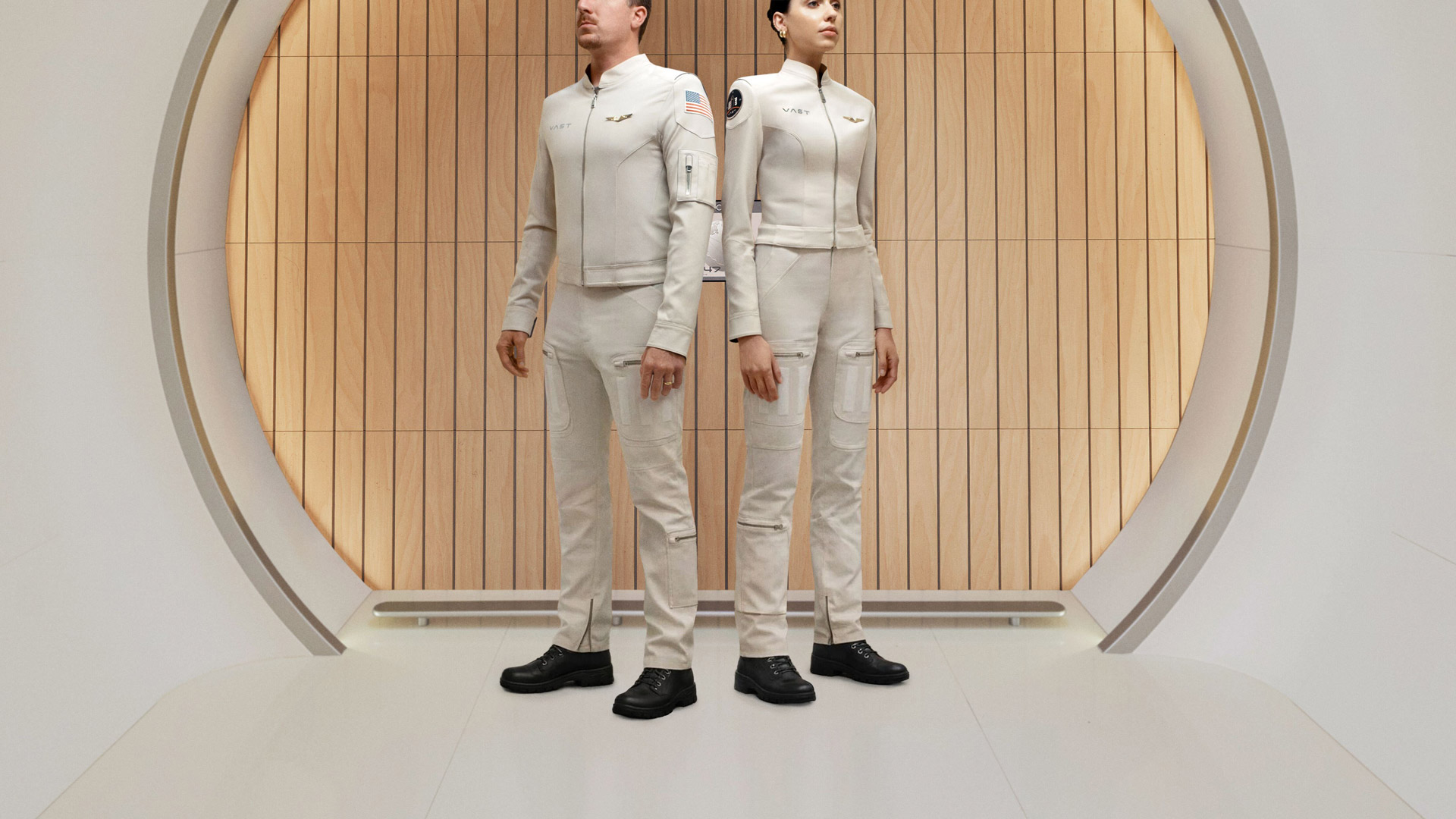
Today at the 41st Space Symposium, we introduced the Vast Astronaut Flight Suit, which showcases Vast’s focus on human-centric design. The crew will wear this suit for events, training, and upcoming missions aboard Haven-1, scheduled to be the world’s first commercial space station, and during the sixth private astronaut mission on the International Space Station in partnership with NASA.
Developed in close collaboration with human spaceflight experts, the suit is designed for use aboard pressurized space stations, and prioritizes mobility, comfort, and on-orbit functionality for work inside the station.
A step toward the future of life in space
Originally built for test pilots in extreme, high-risk environments, flight suits have long been central to aviation and spaceflight, evolving from protective equipment into powerful symbols of mission expertise and identity. But the way astronauts work has changed.
“Over the last two decades on the International Space Station, astronauts have moved away from wearing flight suits every day,” said Andrew Feustel, Vast Lead Astronaut and former NASA acting Chief Astronaut. Feustel has spent over 226 days in space and played an important role in advising on the design of the suit. “The environment has become safer and more like how we work on Earth.”

Astronauts generally find other functional clothing and workwear – often a shirt and cargo pants – to be most productive. The Vast Astronaut Flight Suit embodies the evolution of work and life onboard the space station, combining the symbolism of the traditional suit with the comfort and practicality of modern workwear.
Designed with astronauts, for astronauts
Inside a space station, astronauts are constantly in motion; they’re moving through modules, working hands-free, and navigating tight spaces.
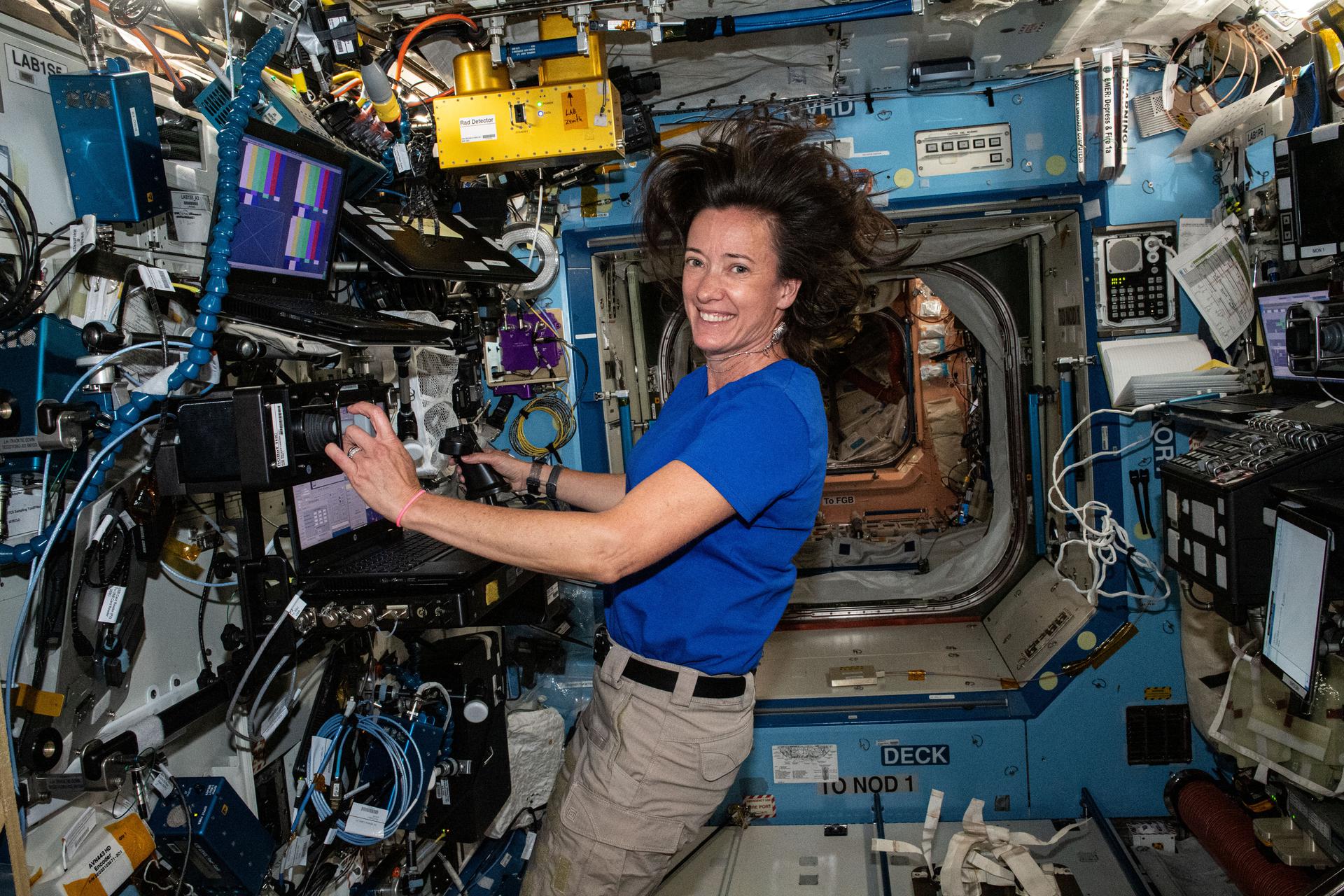
“In microgravity, you need your hands free and your tools always within reach,” said Megan McArthur, Vast Astronaut Advisor and former NASA astronaut who has spent 213 days in space. “You’re constantly moving through small spaces and positioning your body in ways we don’t experience on Earth.”
With utility in mind, the team sought to create a highly functional suit optimized for both training on Earth and daily use in orbit.

“Vast’s human-centric approach to design allows us to create conditions that enable innovation and productivity. Crew well-being and comfort directly impact efficiency, safety, and performance, so that’s why everything that flies is reviewed by those who have lived and worked in space,” said Hillary Coe, Chief Marketing and Design Officer.
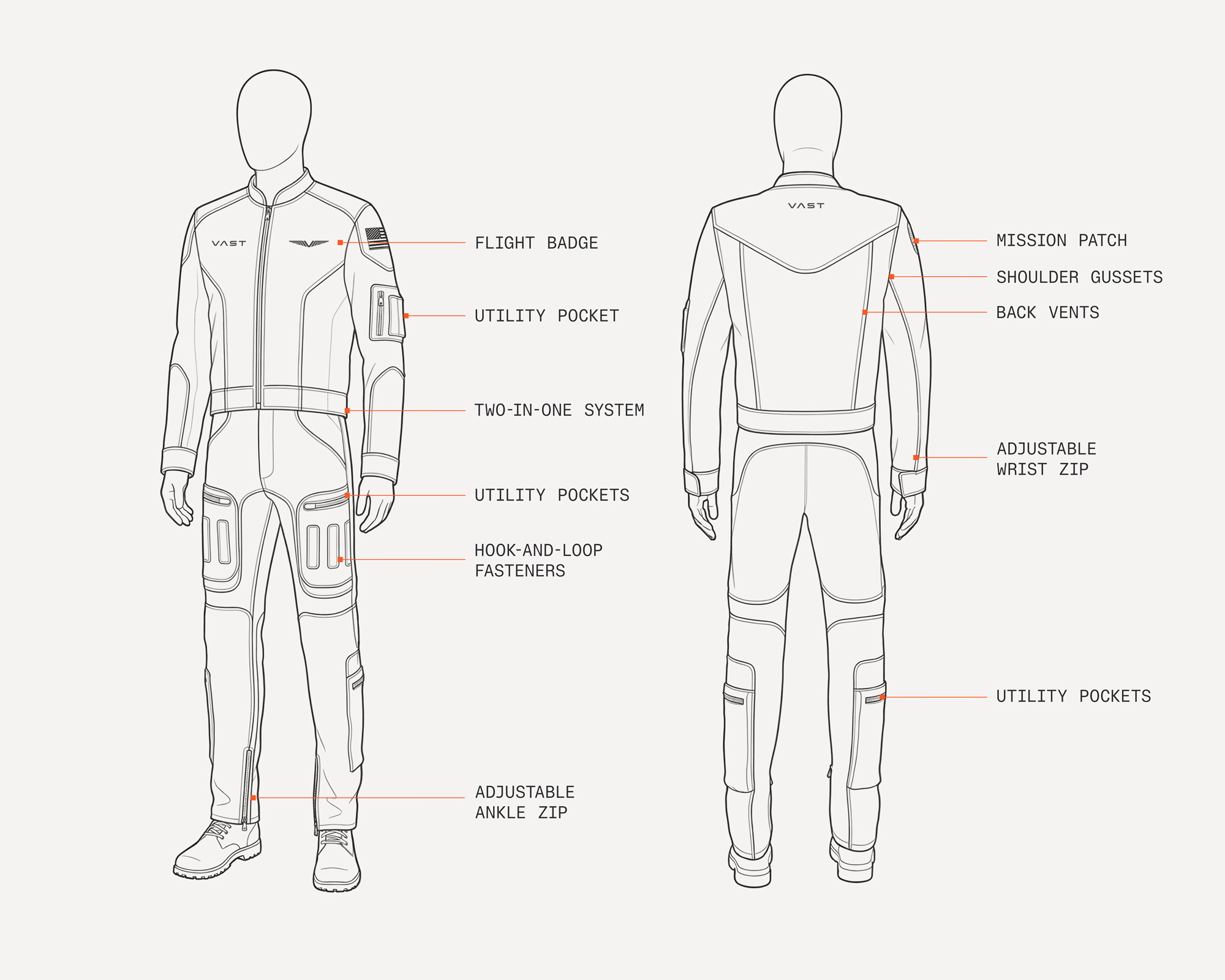
Key features include:
- Modular design: Jacket and pants can be worn separately or zipped together like a traditional jumpsuit.
- Optimized storage: Ergonomic and intentionally placed pockets optimized for use in microgravity similar to cargo pants.
- Easy access to tools: Hook-and-loop fasteners are included on pant legs so tools can be easily stowed and retrieved.
- Enhanced mobility: Lightweight, breathable, and flexible material with back vents and shoulder gussets to enable full range-of-motion.
- Custom fit: Suits will be tailored to each crew member for maximum comfort across long-duration missions.
- Mission identity: Each crew will have a unique mission patch on their flight suit.
- Flight badge: Vast astronauts earn their flight badge, or “wings”, by launching, living on orbit, and performing mission operations in space.
All cargo on the spacecraft is given a specific mass and volume limit, and this also applies to crew members’ personal cargo. This means everything flown is carefully considered. When astronauts have to fly their mission flight suits, it is essential that the suits serve a practical use so they don't become surplus, non-functional cargo.
Over the next year, the suit will undergo iterative testing and refinement, including material validation for safety, durability, and compatibility with the stations’ environment. Like all Vast hardware, the suit will continue to be iterated upon through testing and feedback from spaceflight-experienced crew.

Building the future of commercial space
Shaping the future of humanity’s life in space through human-centric design is a core ethos at Vast. Everything we design and build is done with crew, team, and public safety at its core. Vast’s hardware-rich, stepping-stone approach accelerates development while improving safety and reducing cost by building and testing systems early.

“When we began to conceptualize what astronauts would be wearing onboard Haven-1, we wanted to honor the tradition and history of aviation in human spaceflight and flight suits themselves,” said Feustel. “The suit represents the crew and the mission, but it’s also something astronauts can actually use day-to-day. This is the flight suit for the commercial, crewed spaceflight era, and it's really just the beginning.”