updates
Designing Haven-1: Vast's Human-in-the-Loop Approach

Human-centric design sits at the heart of how Vast builds next-generation space stations for America and its allies, starting with Haven-1, set to become the world's first commercial space station when it launches in 2027. Throughout Haven-1's design and its ongoing integration, Vast's Astronaut Advisors have worked side by side with our industrial design and engineering teams to make sure every crew-facing system is safe, intuitive, and built for the realities of microgravity. Collectively, those advisors have spent more than 1,000 days living and working in space, and that experience shapes decisions down to the smallest detail.
Human-in-the-loop evaluations are an important engineering practice used across the aerospace industry and throughout NASA's human spaceflight programs to test flight-representative hardware, software, and procedures with real people, ensuring designs are built around human capabilities and limitations.
At Vast, we’re conducting human-in-the-loop evaluations with high-fidelity, full-scale models of all the systems that the crew will interact with on Haven-1. This hardware-rich, iterative approach to space station design reduces technical risk and improves crew safety, health, and productivity on orbit.
“When you've lived and worked in space, you understand that microgravity changes everything: the way you move, the way you eat, even the way you sleep,” said Megan McArthur, former NASA astronaut and a Vast Astronaut Advisor who has spent 213 days in space. “Crew well-being and comfort are closely tied to safety, efficiency, and productivity. The fact that Vast is able to build the spacecraft, test the systems with spaceflight-experienced crew, and train the astronauts all under one roof makes me confident that we are well on track for human spaceflight in 2027.”
Deployable utility table, utensil kits, and food packaging
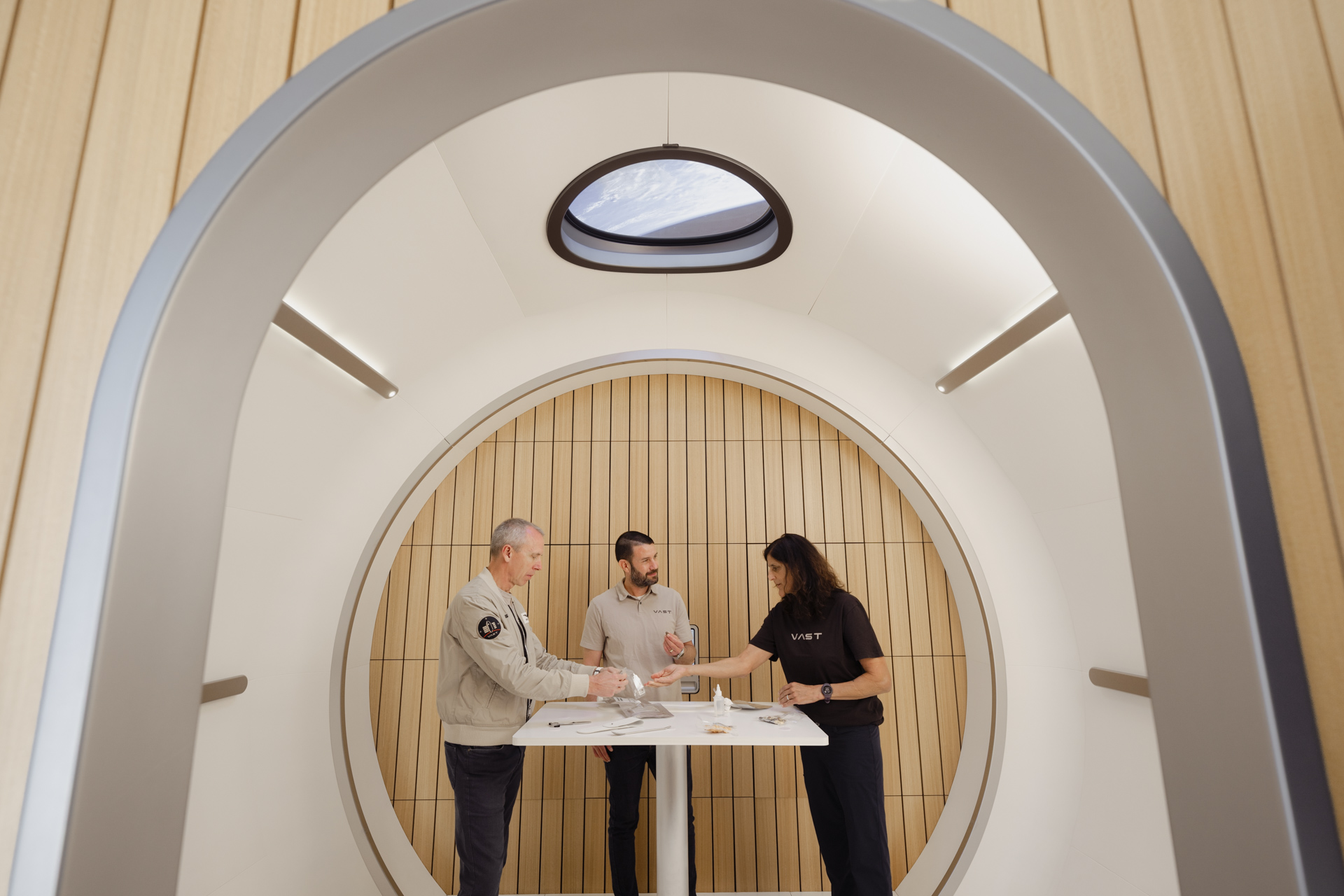
Vast’s design teams consulted with our Astronaut Advisors to develop a microgravity-friendly dining experience, with food packaging and utensil kits integrated with hook-and-loop attachments to secure items to the table. Beyond function, the table sits directly below the station's domed window, providing crew with an exceptional view and creating an environment more reminiscent of dining on Earth. Its positioning helps orient crew with a distinct sense of up and down, which can ease the adaptation to the space environment.
The table will deploy from under the common area floor, and is designed to be multi-functional, supporting communal meals or science payload work depending on the scheduled activity. For example, the table is positioned close to the payload wall so crew can easily remove, work on, and replace science experiments, minimizing the need to move around the cabin with payloads.
Menu design and food preparation
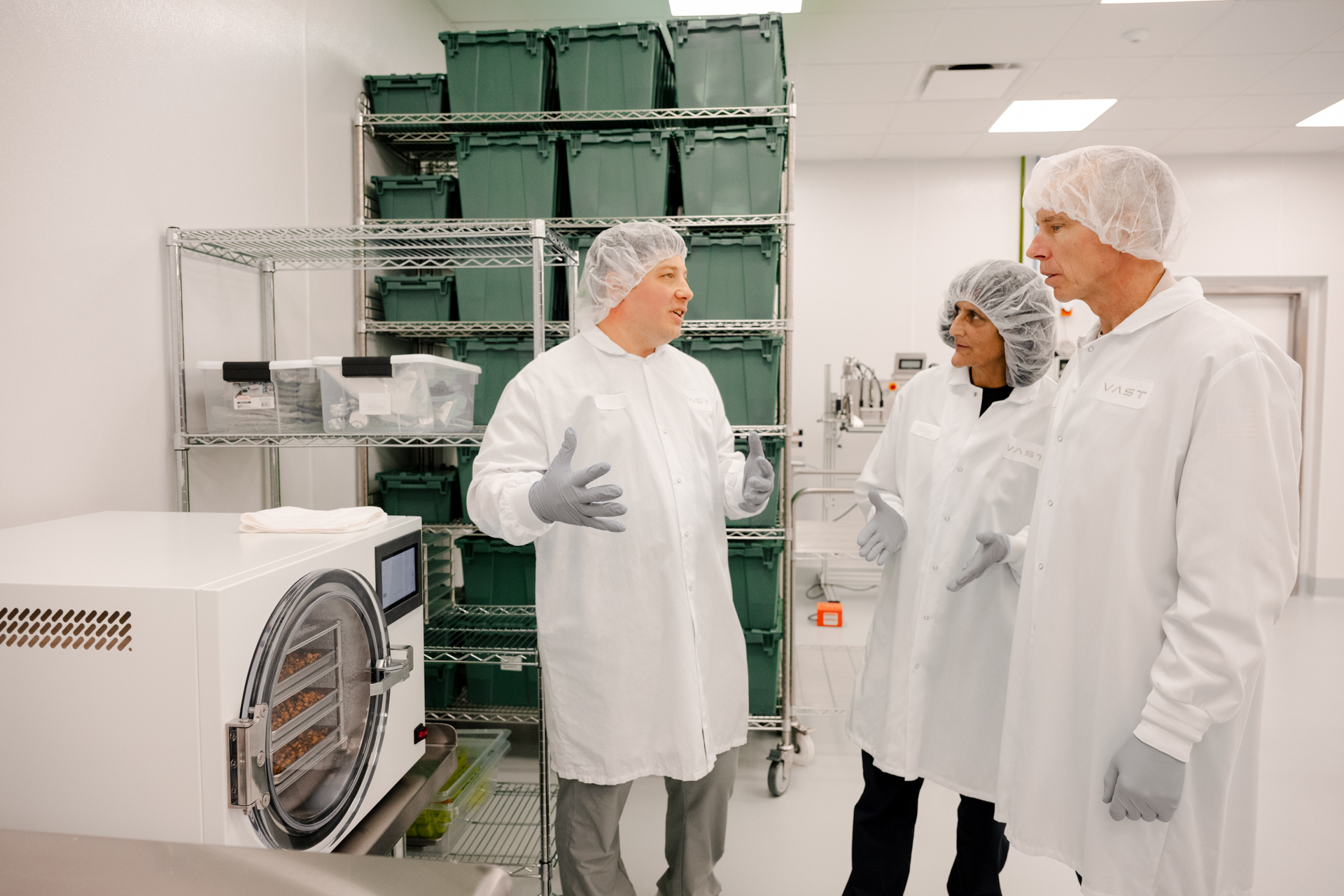
Vast is the first commercial space station company to have an in-house space food development, testing, and manufacturing facility. Our Food Systems team is dedicated to designing and preparing enjoyable, nutritious, shelf-stable, and rigorously safety-tested meals for Vast's private astronaut mission to the International Space Station and for all Haven-1 missions.
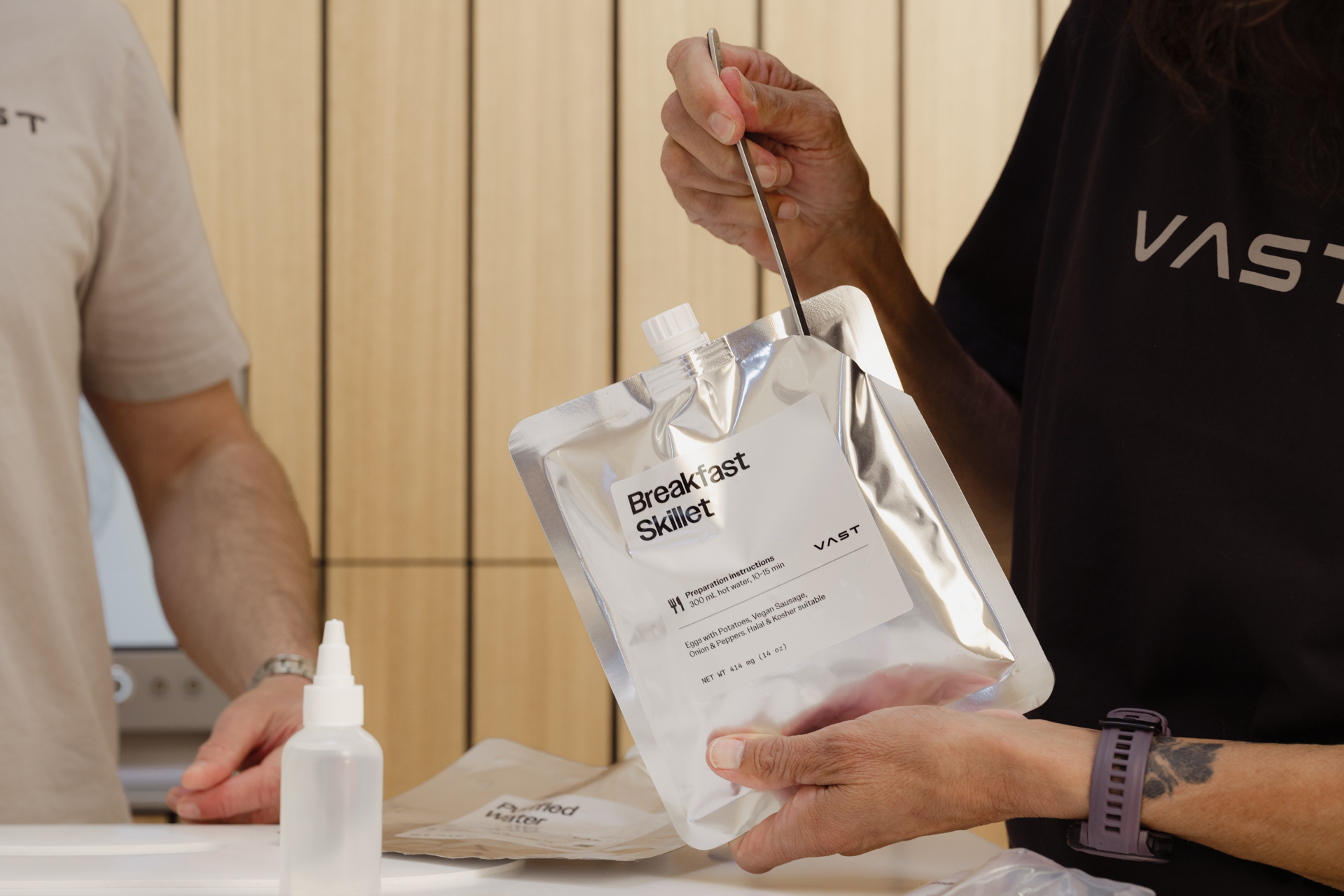
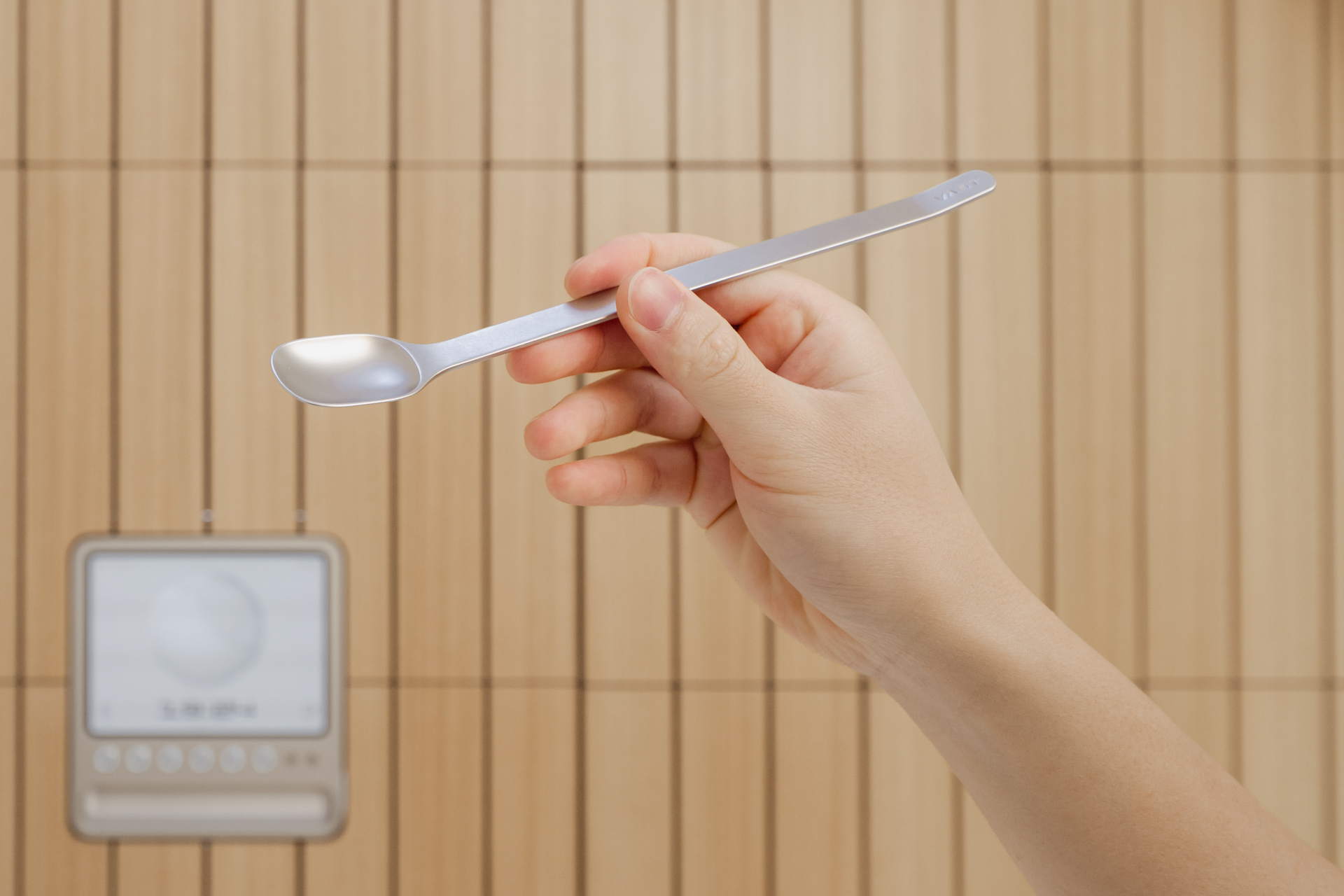
“A unique advantage we have at Vast is that we can connect menu design directly to our in-house food facility and vehicle development work,” said Zack Rosenthal, Manager of Space Food Systems. “This allows us to develop, test, package, and iterate our menus against real mission architecture, rather than treating food as a separate logistics item.”
Habitability and environmental systems
Ingress, egress, and hatch operations are all crucial factors in the design of Haven-1’s aft cone translation path, also known as “the tunnel,” which will connect Haven-1 to SpaceX’s Dragon after docking.
Earlier this year, our Industrial Design and Environmental Control and Life Support Systems (ECLSS) teams worked closely with Andrew Feustel, Vast Lead Astronaut and former NASA acting Chief Astronaut, to incorporate feedback on the system. Feustel, who has spent 226 days in space, evaluated a full-scale model of the tunnel. His evaluation proved critical to optimizing the placement, size, and functionality of the Intermodule Ventilation (IMV) Duct and quick-disconnect system, which together supply airflow to Dragon from Haven-1.
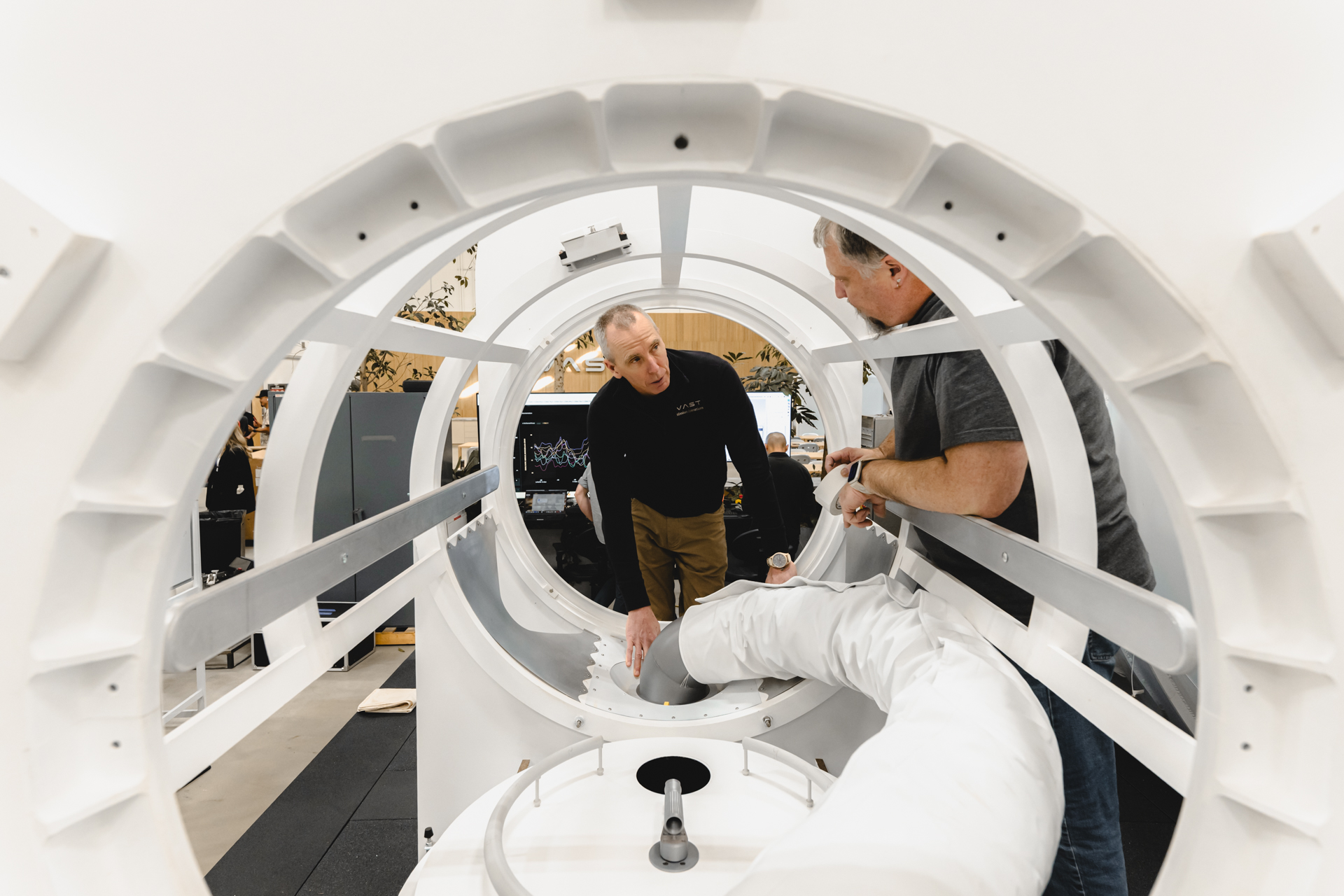
“Feustel's knowledge of mobility in microgravity gave our designers and engineers additional insight into where to place lighting and mobility aids,” said Dali Yu, Senior Manager of Industrial Design. “This helps us ensure IMV installation upon the crew’s arrival to Haven-1 is as ergonomic and streamlined as possible.”
Displays and controls
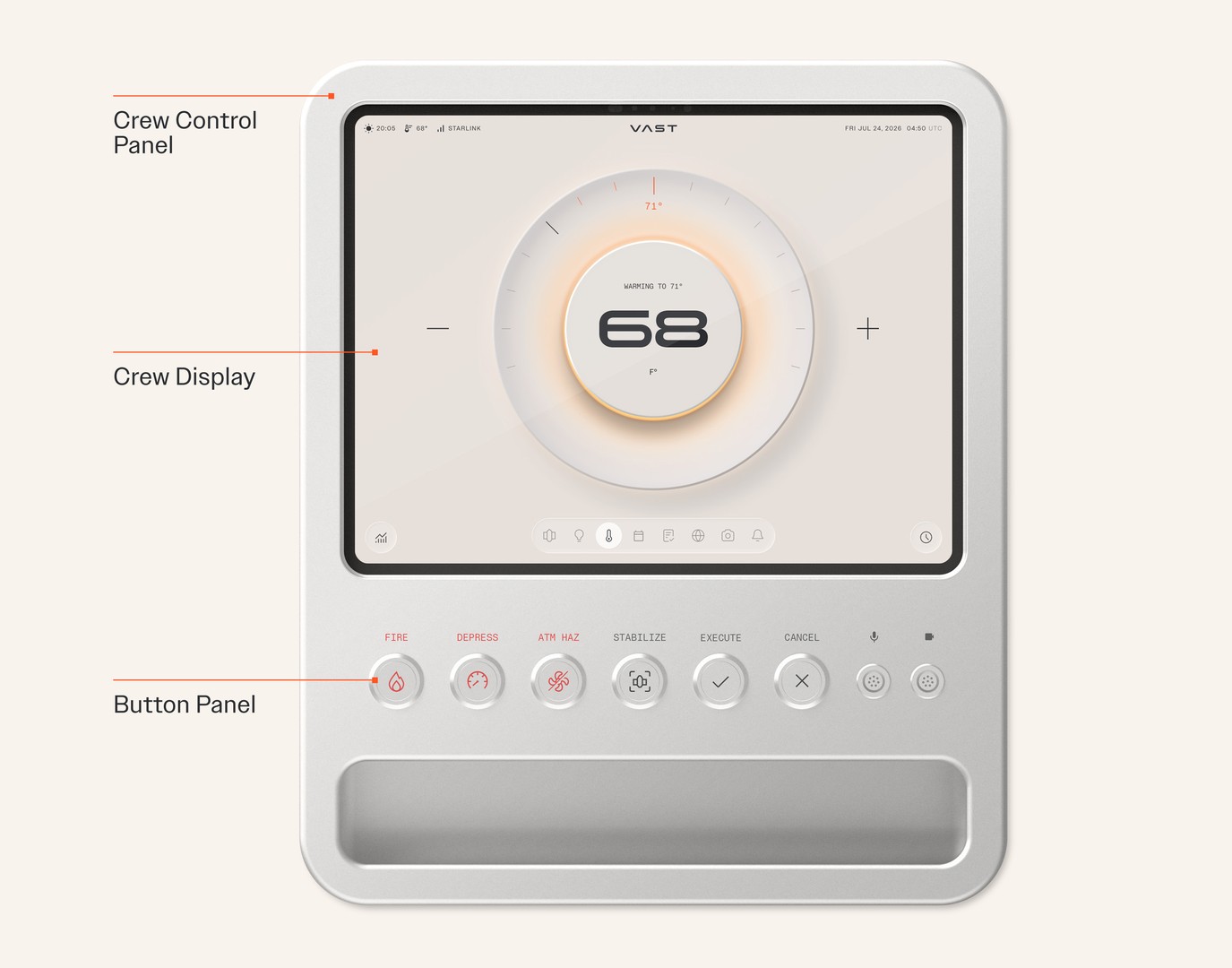
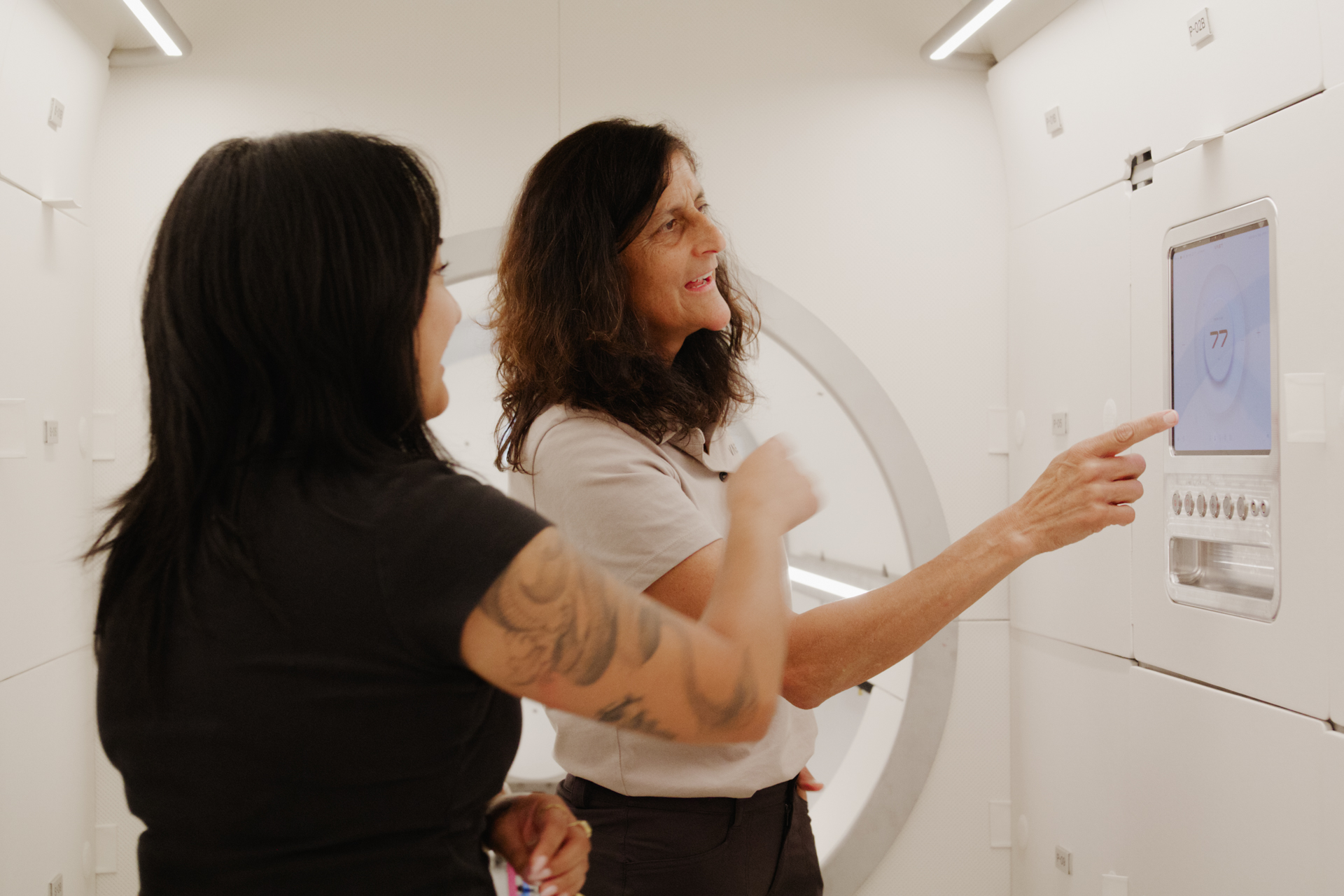
Vast software engineers and interface designers are working with our Astronaut Advisors to curate the most relevant telemetry data for the Crew Displays inside Haven-1, featuring two stationary Crew Control Panels and mobile tablets. The built-in Crew Control Panels offer software-based capabilities, like controlling air temperature, accessing schedules, and setting alerts for when the station passes over a point of interest on Earth, and a Button Panel for hardware-based command sequences in critical situations.
Medical bags
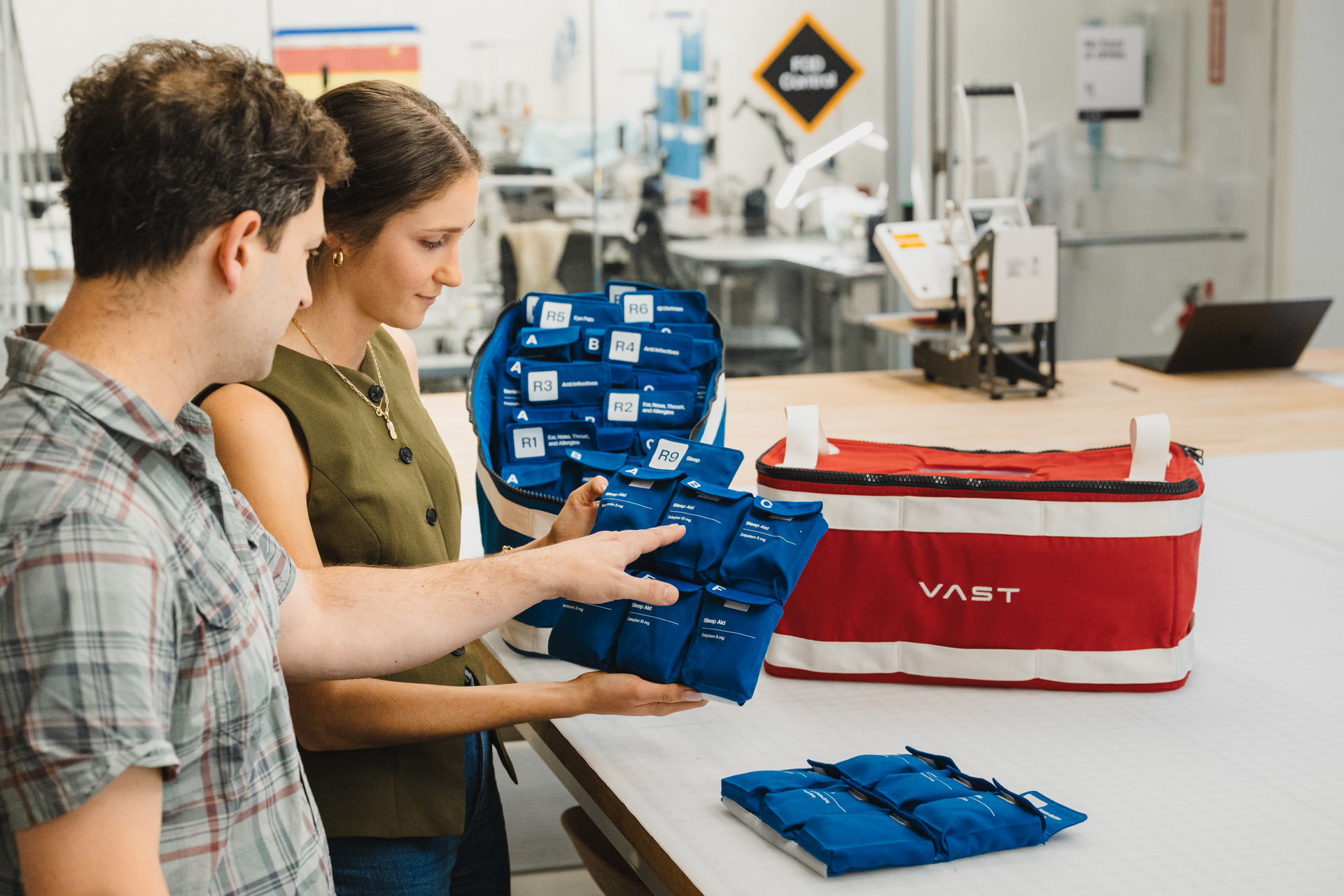
The Vast Space Medicine team has designed medical cargo bags so that astronauts can quickly respond to medical issues during the mission. Medical kit inventory is based on the Haven-1 Commercial Space Station Medical System, which integrates station architecture, mission details, and crew health profiles into a risk model that informs what supplies and systems should be carried onboard. The bags are color-coded and numbered so crew can rapidly locate supplies, while built-in decision support tools guide treatment.
Crew quarters
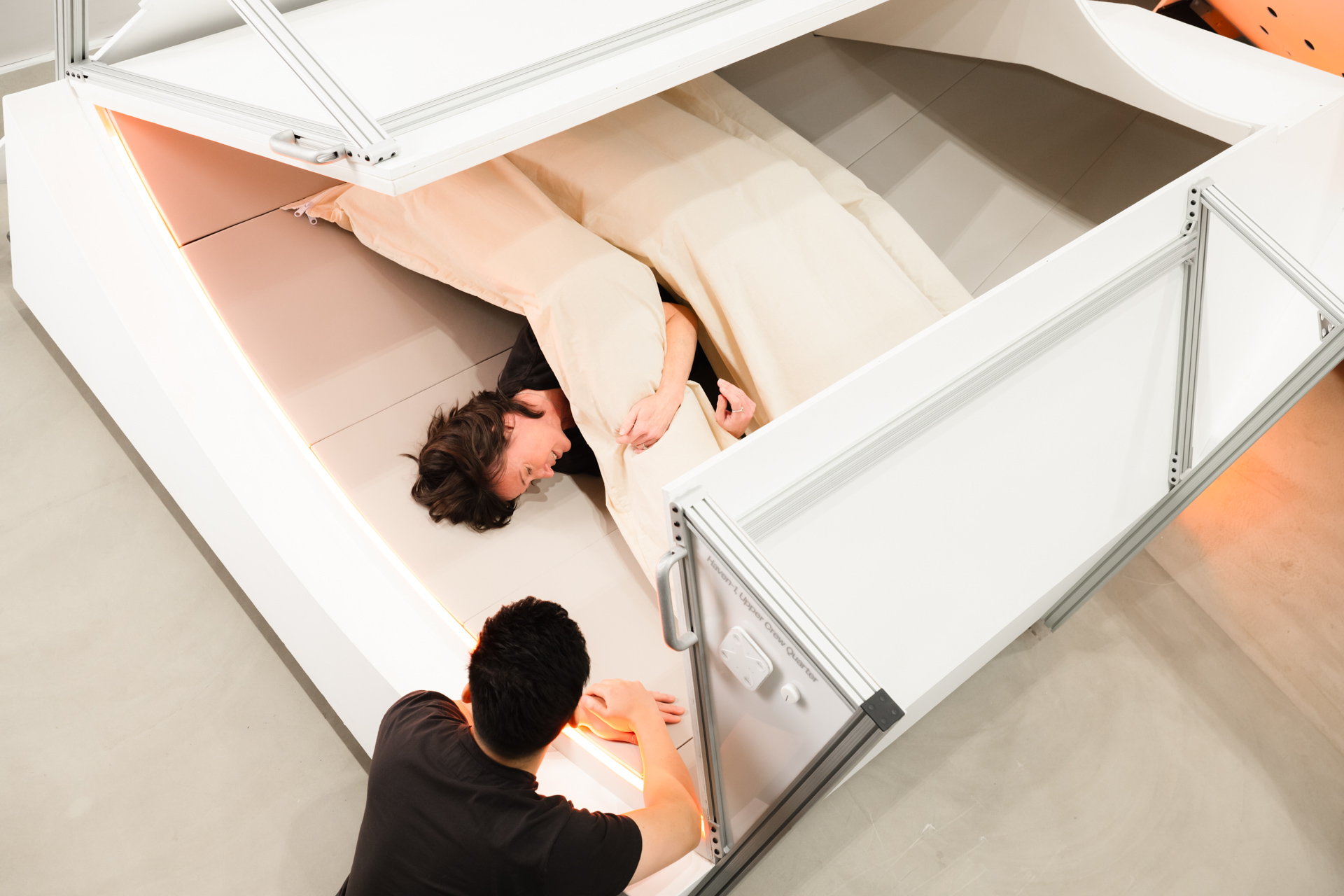
Getting quality sleep in microgravity is historically challenging. Although scheduled for 8.5 hours of sleep every day, astronauts on the International Space Station reported getting an average of 6.5 hours. The International Space Station orbits Earth every 90 minutes, creating 16 sunrises and sunsets per day that disrupt circadian rhythms. Additionally, our muscles depend on gravity to feel that calming sense of relaxation when we lie down to rest.
It’s critical to address any factors that could contribute to error, fatigue, or loss of situational awareness; for that reason, the team designed a novel, patent-pending sleep system that addresses some of the greatest challenges that hinder sleep in space, optimizing physical comfort, lighting, airflow, and easy egress.
“We designed a lighting system that follows natural sleep-wake cycles,” said Lead Astronaut Andrew Feustel, who was closely involved in the design. “Our sleep system inflates to provide a calming, adjustable pressure that can help you relax, simulating the feeling of gravity on Earth.”
Getting ready for human spaceflight in 2027
Feedback from spaceflight-experienced crew is essential not just for the success of our first crewed mission on Haven-1, but for Vast's vision of long-term human habitation in space. From life support systems, to sleep system design, to food preparation, to medical support, these proactive design cycles help ensure that Vast will be mission-ready in 2027.
.jpg)
